In This Article
One institution, several measures
PIF's 2025 annual report presents the fund as a long-term investor balancing financial returns, national impact and resilience. Its headline figures include more than $900 billion in assets under management and $17 billion in net profit. The page also reports cumulative domestic investment and non-oil economic contributions.
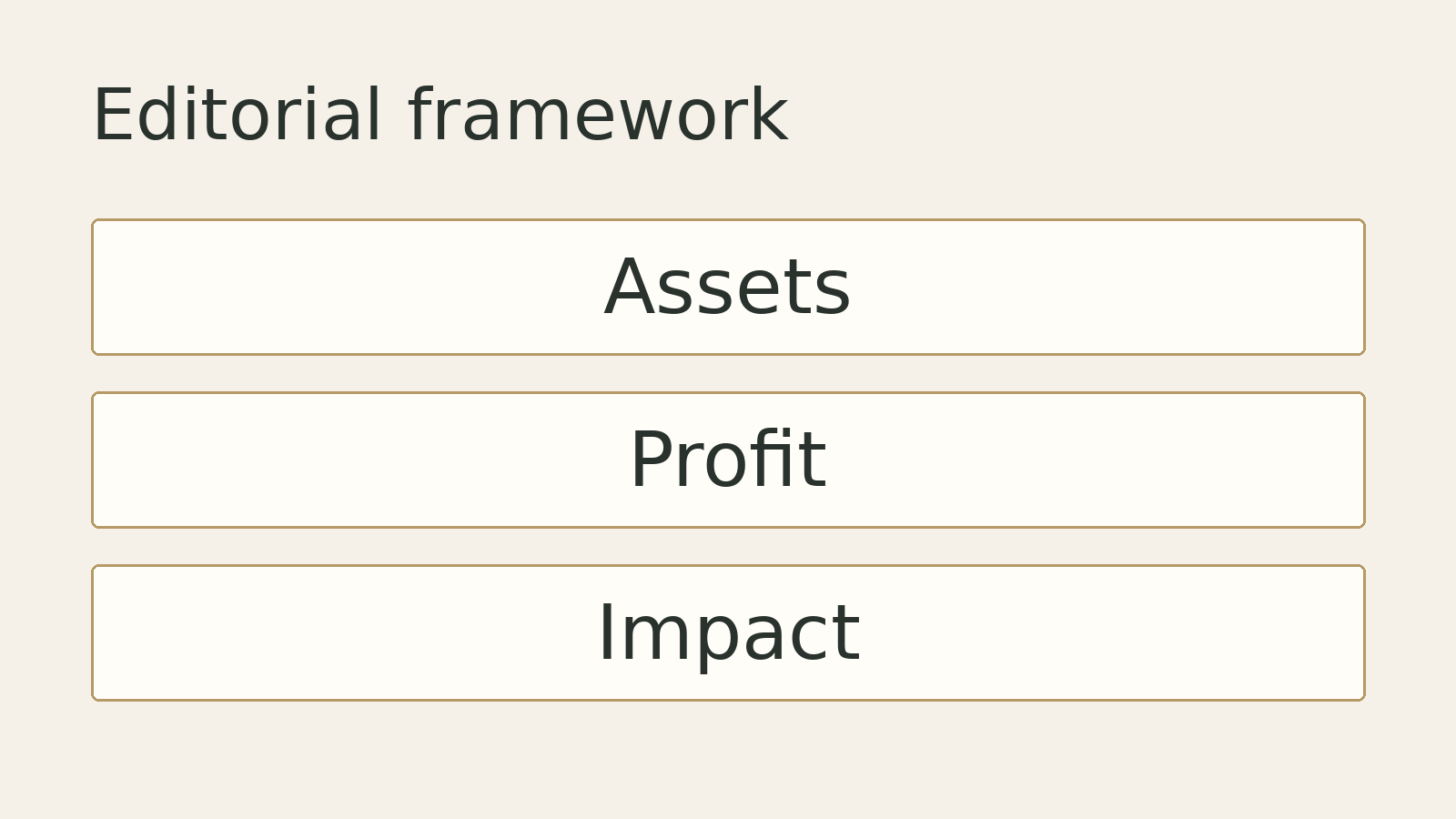
These figures describe different things. Assets under management is a stock of assets; profit is a period result; investment deployed records capital committed or invested under the report's definitions. Economic contribution is another measure again. Adding them together, or using one as a substitute for another, obscures rather than explains performance.
Keep the time periods separate
The report states more than $199 billion in investments in new Saudi projects over 2021-2025 and more than $342 billion in contribution to real non-oil GDP over the same period. Those are cumulative, self-reported impact measures. They should not be described as a one-year financial return.
A careful reader can make a small table before forming a view: measure, period, currency, definition and source. Where an impact estimate depends on a methodology, that methodology matters. A headline on a report landing page is a starting point for analysis, not the end of it.
From portfolio growth to portfolio maturity
PIF's report describes its next phase in terms of six interconnected domestic ecosystems, alongside strategic and financial portfolios. Management also points to portfolio maturity and stronger financial performance. Those are stated priorities; their execution should be assessed through later disclosures rather than assumed from the language alone.
The business question is how investments connect: whether suppliers, customers, skills and infrastructure develop around them. A project announcement can indicate ambition, but revenue, delivery milestones and cash generation provide different evidence. Both policy purpose and commercial discipline can be discussed without collapsing them into a single score.
Use the report as a comparison base
For companies seeking to understand opportunities around the portfolio, the annual report can help identify priorities. It does not establish procurement access, financing eligibility or a commitment to a particular partner. Those require the relevant company's current process and terms.
The strongest reading of a sovereign investor's report is neither a list of large numbers nor a verdict based on one metric. It is a consistent comparison across periods, with financial results, deployment and economic impact kept distinct. PIF's own presentation gives readers the categories; disciplined analysis must preserve them.
Sources and scope
Editorial analysis of public sources, not investment advice. Reporting periods and definitions differ. No return, eligibility or financing outcome is promised.