In This Article
Advice and opportunity are different resources
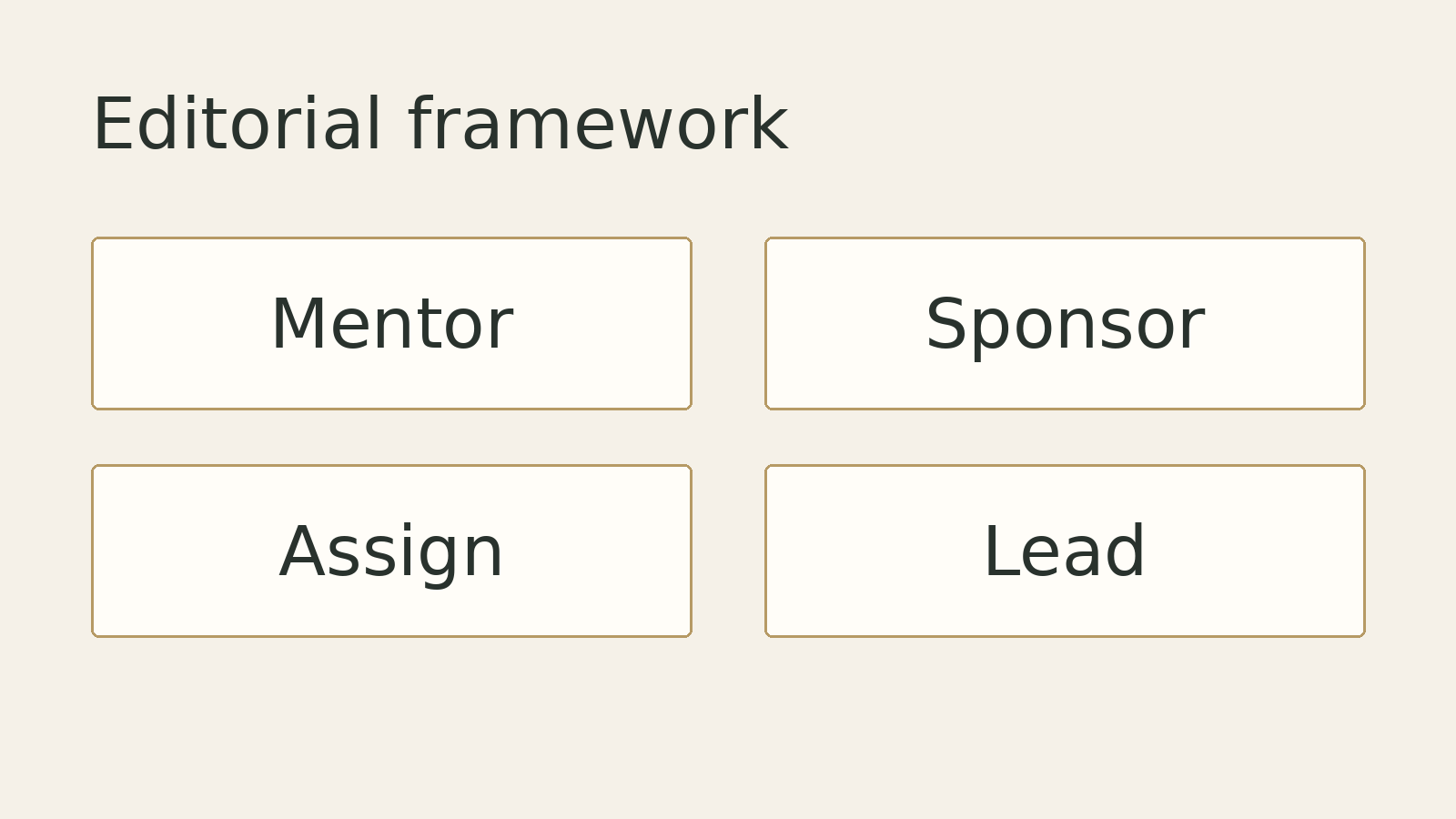
A mentoring conversation can help an employee understand a difficult assignment. It cannot, on its own, put that employee in charge of the next one. For companies trying to build a stronger pipeline of women leaders, the distinction between advice and opportunity is a useful starting point.
UN Women's toolkit for male allies in the Arab States describes sponsors as advocates who use their access and influence to open doors for a colleague. It places sponsorship alongside work on workplace bias and career development. The implication for employers is practical: a programme should change access to consequential work, rather than count meetings alone.
Define the work that builds a leadership record
Before pairing sponsors and employees, identify what the company actually rewards. Does advancement depend on managing a budget, leading a customer relationship, running a site, rescuing a troubled project or presenting to the investment committee? If those experiences are allocated informally, a polished development curriculum may leave the underlying bottleneck intact.
A management team can map the assignments that have preceded recent promotions and compare who gets offered them. That is an internal diagnostic, not evidence that a particular pattern applies to every Middle East company. It is also a way to notice when support roles receive praise while commercially visible assignments repeatedly go elsewhere.
Make sponsorship accountable and consent-based
A useful sponsor can nominate an employee for a role, introduce their work to decision-makers and argue for fair consideration. The employee should still have control over the opportunities pursued. Sponsorship should not require accepting unwanted travel, a public personal story or a role incompatible with agreed working arrangements.
Nor should sponsorship become a private shortcut around selection. Clear criteria, more than one advocate and a documented review can reduce dependence on a single powerful person. Managers remain responsible for fair assessment. Employees outside a formal programme should not lose access to the same opportunities.
Measure changes in access
The strongest review begins with the opportunity, not the event calendar. Which participants gained budget ownership? Who moved into operational or revenue responsibility? Were comparable candidates considered for the same stretch roles? Retention and promotion can then be read alongside these earlier indicators.
The UN Women toolkit also discusses care policies and bias. Sponsorship cannot compensate for a workplace that penalises employees for using its own leave arrangements or rewards constant availability over results. Leadership development works better when the assignment process, performance criteria and everyday working practices support the same aim. Mentoring remains valuable, but it should not be asked to fix barriers it cannot reach.
Sources and scope
This is editorial analysis of public material, not an interview or a claim about every employer in the region. Recommendations are proposed management practices, not statements of local employment law.