In This Article
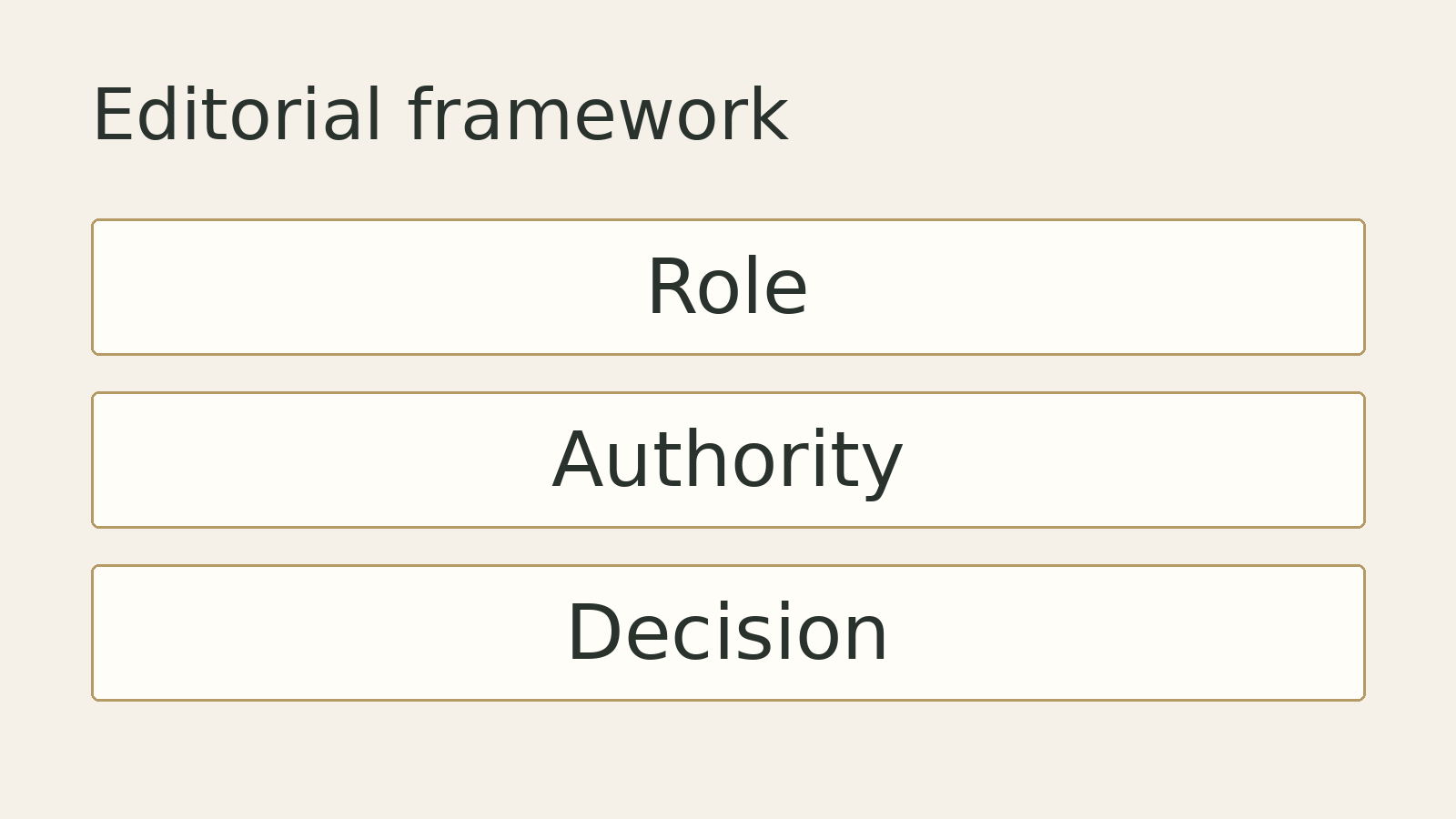
Name the roles in the room
The IFC Family Business Governance Handbook overview describes the overlapping roles individuals can hold in a family business. It also discusses family governance structures, boards and senior-management succession. Published in 2011, it is a governance resource, not a current legal rule for any Gulf country.
Its framing supports a practical question before a meeting: in what capacity is each person participating? A shareholder discussing ownership, a director overseeing the business and a manager requesting an operating decision may be the same person. The responsibilities still need to be distinguished.
Write the decision on the agenda
Describe the question in one sentence and identify which body or role has authority to answer it under the company's actual documents and applicable framework. If that authority is uncertain, resolve it before treating a discussion as approval.
An agenda can separate information, consultation and decision items. Participants should know whether they are being briefed, asked for advice or asked to approve a defined action. This is a proposed meeting method. It does not create authority that the organisation's governance arrangements do not provide.
Keep family and operating issues visible
An operating question may expose a wider concern about family participation or expectations. Record that concern without forcing the meeting to decide an unrelated matter. The IFC overview treats family structures and the board as distinct governance subjects; a practical agenda can respect that distinction.
Where interests overlap, obtain the appropriate advice about process and conflicts. Do not assume that familiarity settles a decision or that an informal conversation replaces a required approval. Equally, avoid presenting every disagreement as a governance crisis when a clear scope and a separate discussion may be enough.
Record the result and the next owner
Close the meeting with the decision, any conditions, the person responsible and the evidence needed before implementation. If no decision was made, say so. Silence or a friendly discussion should not later be rewritten as unanimous consent.
A short record helps the next meeting start from the same facts. It also makes it easier to distinguish a family expectation, an owner decision, board oversight and management execution. The purpose is not more ceremony. It is to reduce ambiguity about who decided what and what remains to be done.
Sources and scope
This is an editorial working method, not legal or tax advice. The linked sources supply the context; the suggested checklists are our analysis. International research is not presented as a Middle East survey. Confirm obligations for the specific entity and activity where relevant.