In This Article
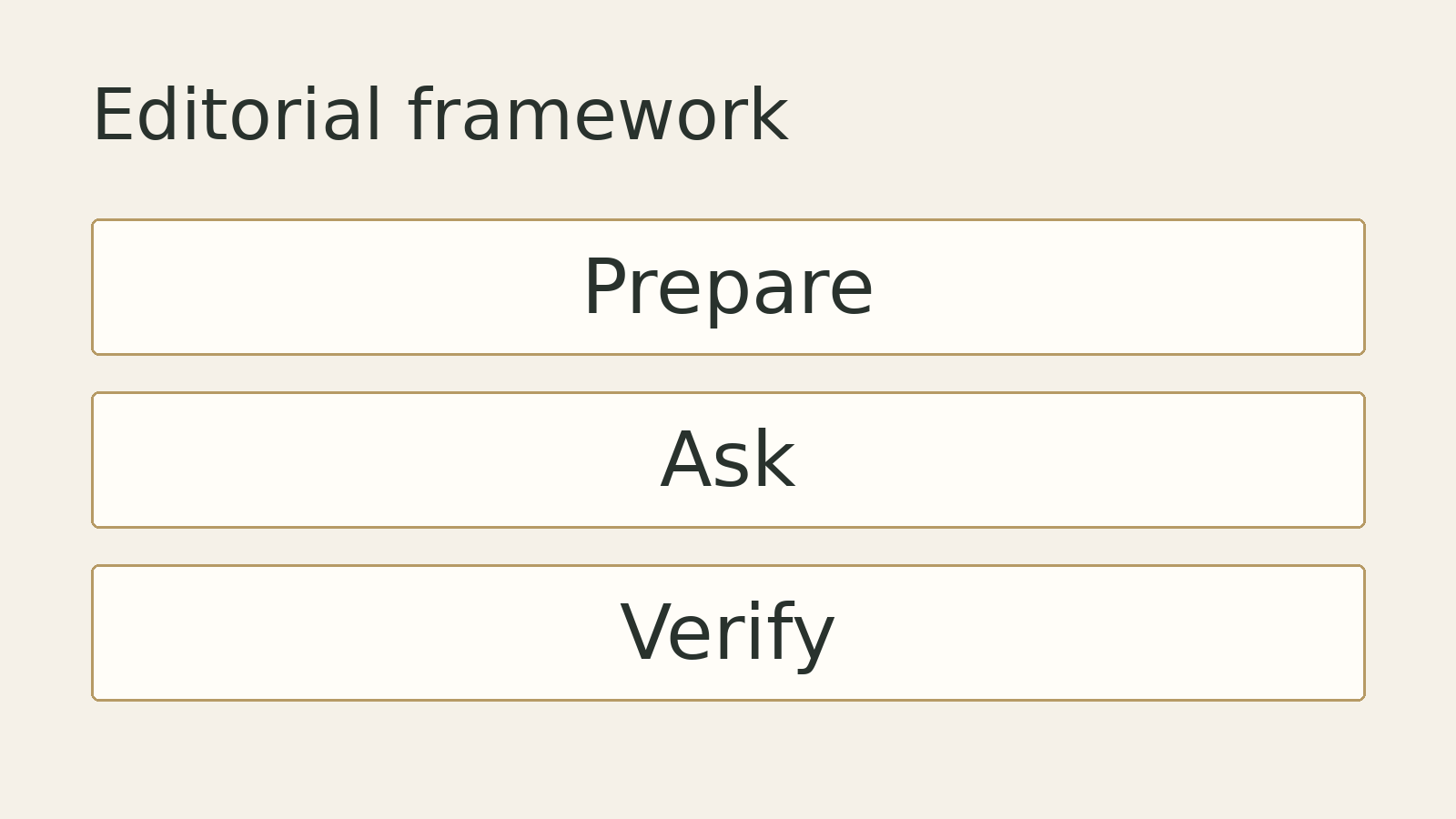
Build questions from the record
Reuters' public standards emphasise accurate sourcing, the context of quotations and clear ground rules with sources. These are Reuters' published standards, not a claim that this publication is connected to Reuters. They offer a useful reference when preparing a business interview.
Start with a dated record of the person's current role, public responsibilities and relevant company disclosures. Turn gaps into questions. A public biography can help establish context, but it does not justify inventing a personal turning point, a private motive or a quotation.
Ask for an example and a boundary
A question about leadership becomes more useful when it asks for a decision, the circumstances and what happened afterward. Invite the speaker to explain what did not work or what remains uncertain. Do not make a flattering conclusion part of the question and then treat agreement as independent evidence.
Where a figure or achievement matters, ask for its period, scope and supporting source. Distinguish the speaker's own account from a verified company result. A conversation can reveal an interesting lead without settling every factual claim made during it.
Agree how the conversation is recorded
Clarify the interview ground rules, the agreed recording method and any review arrangements before relying on them. An unanswered request for approval is not approval. Keep a written record of the agreed process so that neither side has to infer it from a friendly exchange.
Afterward, preserve accurate quotations and their context. If wording needs substantial rewriting, paraphrase with clear attribution rather than presenting the revised line as verbatim speech. A proposed quotation drafted in advance must not become evidence that the person actually said it.
Verify before turning the conversation into a profile
Check roles, dates, numbers and other material claims against suitable sources. Where verification is incomplete, mark the limitation in the working draft and resolve it before release. Keep the distinction between interview evidence and background research visible to the editor.
The aim is a prepared conversation, not a prepared personality. A useful brief helps an interviewer ask sharper questions and helps the eventual article say what was actually learned. It should never manufacture the appearance of access, intimacy or endorsement that the reporting did not earn.
Sources and scope
This is an editorial working method, not legal or tax advice. The linked sources supply the context; the suggested checklists are our analysis. International evidence is not presented as Middle East survey data or universal law. Confirm requirements for the specific entity with qualified advisers where relevant.