In This Article
Sovereign ownership is often reduced to the phrase patient capital. Mubadala's public documents offer a more useful starting point: a named shareholder, an allocation of authority and a stated investment mandate. Reading those documents together reveals how this Abu Dhabi investor describes its own model. It does not prove how every portfolio company behaves or why executives choose to work in the region.
The shareholder and the board
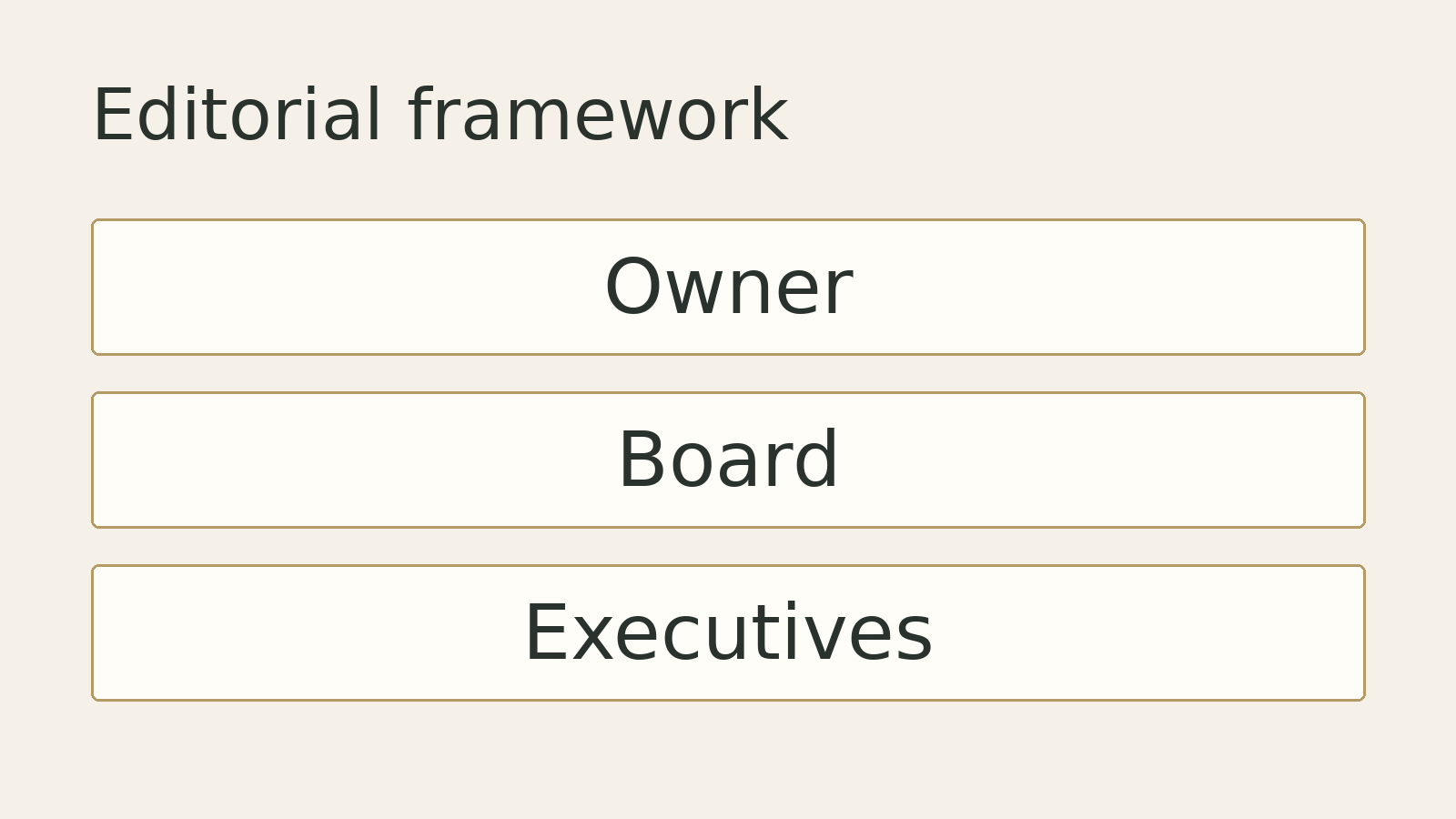
Mubadala identifies the government of Abu Dhabi as its sole shareholder. Its board page links strategic direction, oversight and corporate governance to Abu Dhabi's development and diversification priorities. It also says the board reviews and approves strategic direction and business plans annually.
This makes the shareholder relationship explicit. It also shows why long-term ownership and regular review are not opposites: the published structure combines continuing shareholder support with an annual approval process. That observation should not be stretched into a claim about investment returns or the quality of every decision.
Delegation has a defined place
The board delegates aspects of executive management to the group chief executive and investment committee under Mubadala's delegation of authority. The committee page says it is responsible to the board for developing and monitoring investment strategy, overall performance and managing the business under its charter.
For a reader studying management systems, the important distinction is between delegation and the absence of oversight. The public description assigns responsibilities at more than one level. It does not disclose every approval threshold or every internal procedure.
One investor, several investment approaches
The 2025 annual report describes direct investment, an endowment approach through Abu Dhabi Investment Council and a GP-led approach through Mubadala Capital. It states a mandate to deliver sustainable, risk-adjusted returns for the shareholder.
Those approaches should not be compressed into a single operating model. A direct investment relationship is not identical to an endowment portfolio or an alternative asset-management platform. Their inclusion in one group explains why a broad label such as sovereign capital can conceal meaningful differences.
What an executive can take from the documents
The strategy identifies enterprise risk management as a framework for identifying, assessing and managing risk in line with risk appetite and strategic objectives. It also describes sustainability considerations across the investment lifecycle. These are the company's statements about its processes, not an independent audit of outcomes.
The useful management questions follow from that distinction: who approves strategy, who executes it, how risk is escalated and which results are reported back? Mubadala's public model offers a specific case to examine. Claims that sovereign ownership automatically improves management culture need evidence beyond these documents.
Sources and scope
Checked 27 October 2026. Analysis and recommendations are distinguished from source statements. Sources below do not imply an interview, endorsement or guaranteed outcome.